
A innovative treatment
Introducition of a incredible new methods full of hope
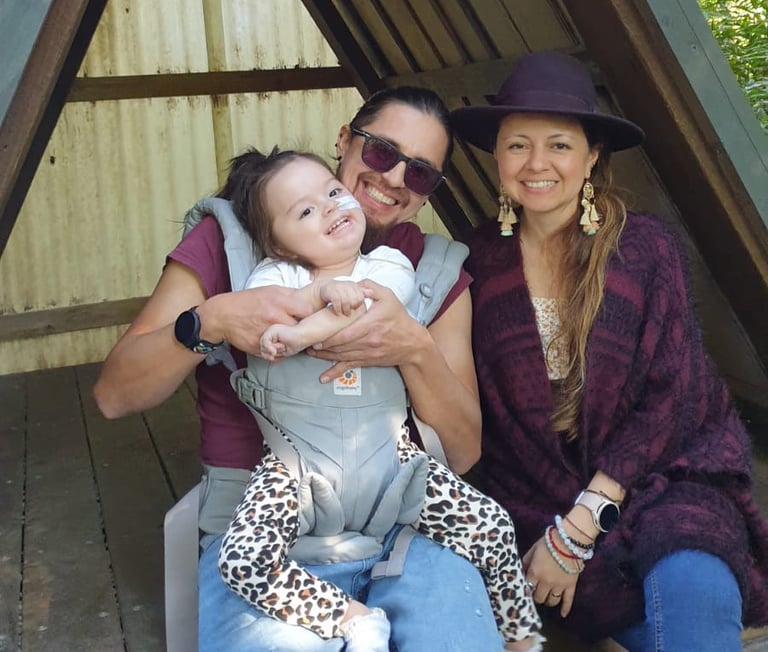
From the moment Antonella was born, our lives changed in ways we could never have imagined. Receiving a diagnosis for a rare condition so early in her life was overwhelming, but it also awakened something powerful in us, especially in her mum. From that first day, she became a tireless seeker of answers, spending nights reading, researching, and refusing to accept that there were no alternatives for our daughter’s future.
While most families settle into the rhythm of newborn life, we were learning medical terms, studying therapies, and searching the world for possibilities. Every new piece of information became a thread of hope. Every story from another family became a guide.
That determination led us to discoveries we never expected, treatments in other countries, stories from parents who had walked similar paths, and scientific approaches that offered even a small chance of progress. Through books, articles, and endless conversations, Antonella’s mum kept pushing forward, refusing to let fear or uncertainty stop her. Her love became our compass.
The Cytotron
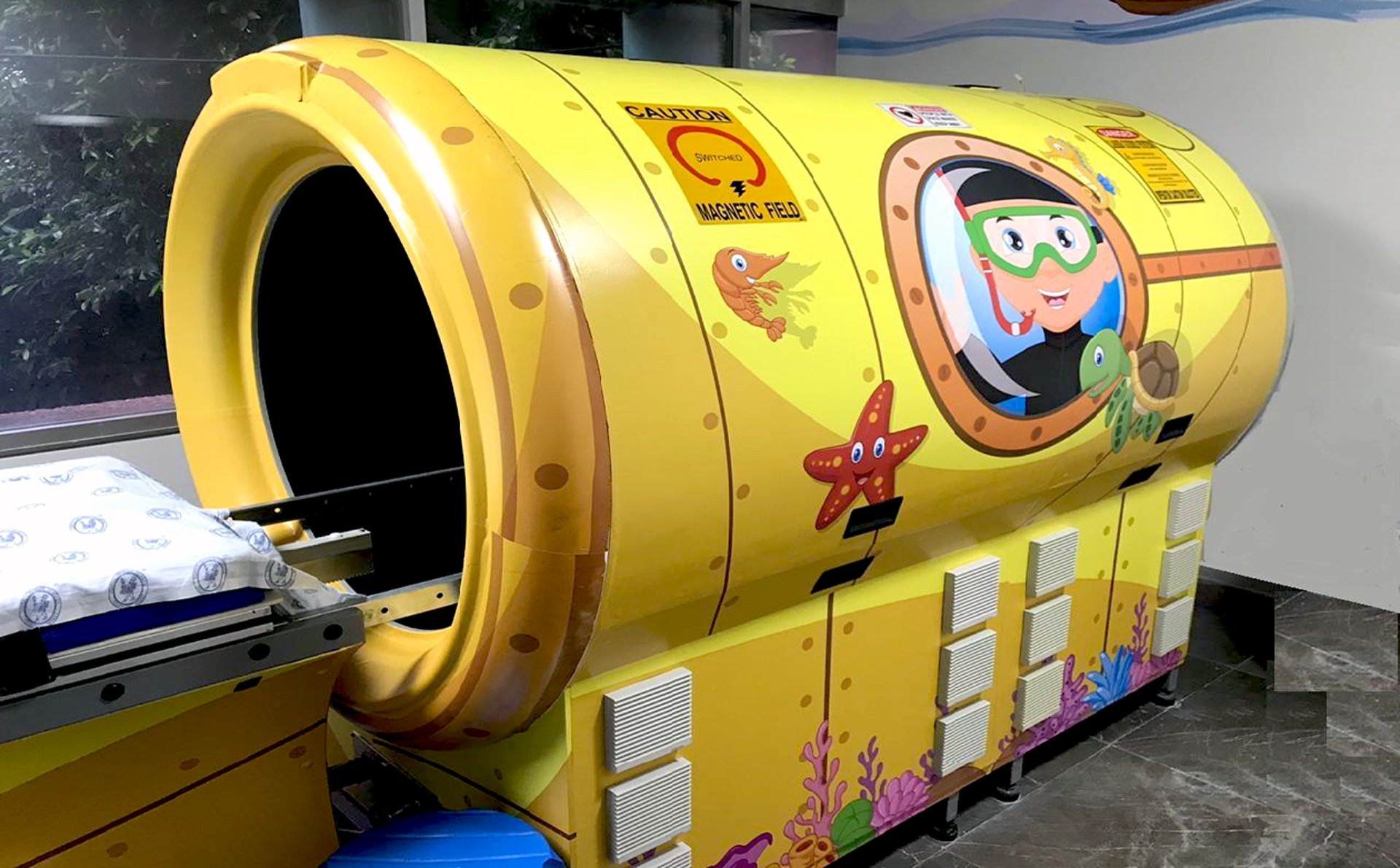
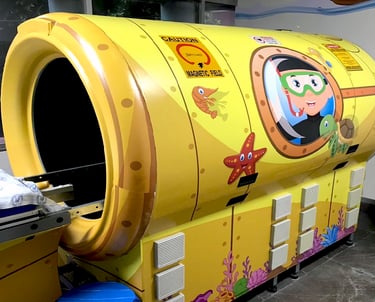
It was during one of those long nights that she found a book that would change everything: Lucca’s World by Barbara Anderson. She picked it up searching for comfort, but instead found something far more powerful: possibility, hope. In its pages, she read about a therapy called the Cytotron, an experimental Indian medical device developed over 30 years by Dr. Rajah Vijay Kumar. The book described how this technology uses Rotational Field Quantum Magnetic Resonance (RFQMR), originally designed to treat cancer and support tissue regeneration. But what captured her heart was something else: families reporting unexpected benefits in children with cerebral palsy.
For a mother who had spent years searching for even the smallest ray of hope, this felt like a door opening.
From that moment, the Cytotron became part of our vocabulary, our research, our late-night conversations. We learned everything we could about how it was developed, how it works, and why some families believed it helped their children. It wasn’t a promise, but it was a possibility, and for parents like us, possibilities matter.
For detailed information about the Cytotron, visit: https://www.shreis.org/cytotron
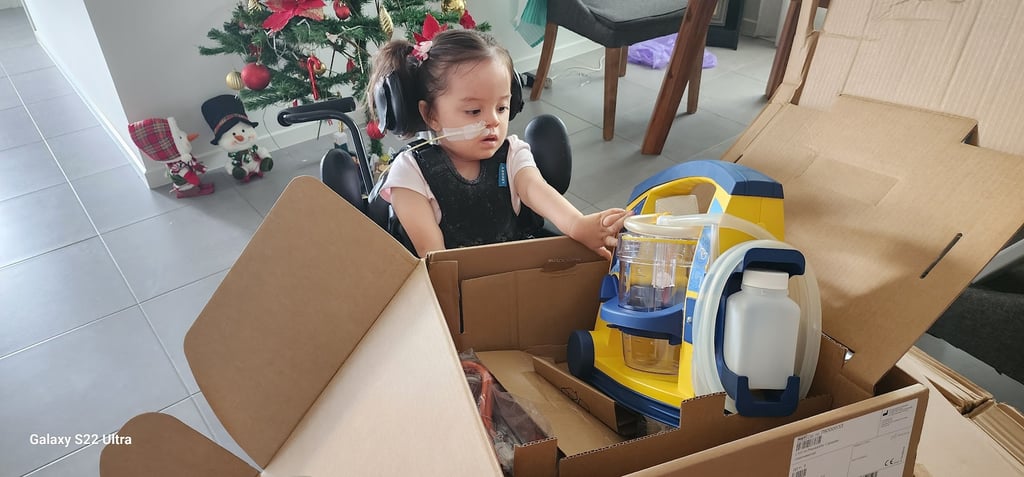
Our first step into experimental treatments took us far from home (Australia), all the way to Colombia, where both of our families live. Being surrounded by them gave us the strength we didn’t know we needed. They helped us look after Antonella day and night, giving us moments to breathe, rest, and prepare for what was ahead.
But even with all that support, the journey wasn’t easy. Before the stem cell intervention, Antonella experienced a difficult episode, a reminder of how fragile her condition is and how quickly things can change. Still, we held on to hope, because we knew this treatment might offer her even the smallest chance at progress.
The therapy didn’t transform everything overnight, but it did contribute to her development. We saw subtle but meaningful changes: more awareness, more connection, more moments where her body felt a little less trapped. Those small steps were enough to keep us going. Enough to remind us that Antonella deserved every opportunity we could find.
We returned home ready to continue with the next two interventions, believing we already knew the path ahead.
Then came the unexpected call from Mexico!
Before we received that call, when Antonella was almost two years old, we sent our first email to India. It was a message filled with hope, fear, and the quiet desperation of parents who would cross the world for their child. That email marked the beginning of a new chapter, one shaped by persistence, paperwork, waiting, and the belief that somewhere out there, something might help our daughter grow, connect, and thrive.
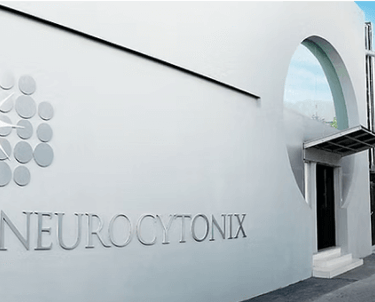
A new treatment, non‑invasive, gentle, and full of potential, was now available in Mexico: the NeuroCytonix. Unlike the therapies we had planned, this one didn’t require surgeries or painful procedures. It offered a different kind of hope, one that didn’t add more pain to Antonella’s already fragile body.
In that moment, our plans shifted. Not because we doubted the other interventions, but because this new opportunity felt like the right next step. After years of carrying Antonella through every challenge, literally and emotionally, this treatment felt like a door opening exactly when we needed it. Although we weren’t able to secure a trial spot in India, the team eventually redirected our search to NeuroCytonix in Mexico.
An opportunity for Antonella
NeuroCytonix Mexico
That redirection became a turning point. NeuroCytonix had launched a clinical trial for children with cerebral palsy, completing enrollment in June 2021 with 52 children. On January 19, 2023, the program received a regulatory acknowledgment letter from COFEPRIS, an internationally recognized authority and member of both the International Council for Harmonisation and the Pharmaceutical Inspection Cooperation Scheme. COFEPRIS is classified as a Level IV regulatory body, meaning it is fully competent and efficient in carrying out health regulatory functions. This acknowledgment letter marked the formal and legal conclusion of the clinical trial. Knowing that a structured program existed, one focused specifically on children like Antonella gave us renewed strength. It felt like the path we had been searching for was finally beginning to take shape.
We submitted Antonella’s application, sharing her medical history, her progress, and the small but powerful signs of potential we had fought so hard to nurture. After reviewing everything, the team invited us to speak with one of their doctors. That conversation felt like opening a door we had been knocking on for a long time.
They looked at Antonella not just as a case, but as a child with possibility. After carefully evaluating her history, her challenges, and her capacity for improvement, the team determined that she was an excellent candidate for their specialized therapy. Hearing those words felt like a breath we had been holding finally released.
For us, being chosen is more than an acceptance. It is a blessing. It is a moment of renewed hope. It is the beginning of new possibilities and a brighter path forward for her journey.
For detailed information about the Cytotron, visit: https://www.neurocytonix.com/

Preparing for the Journey Ahead
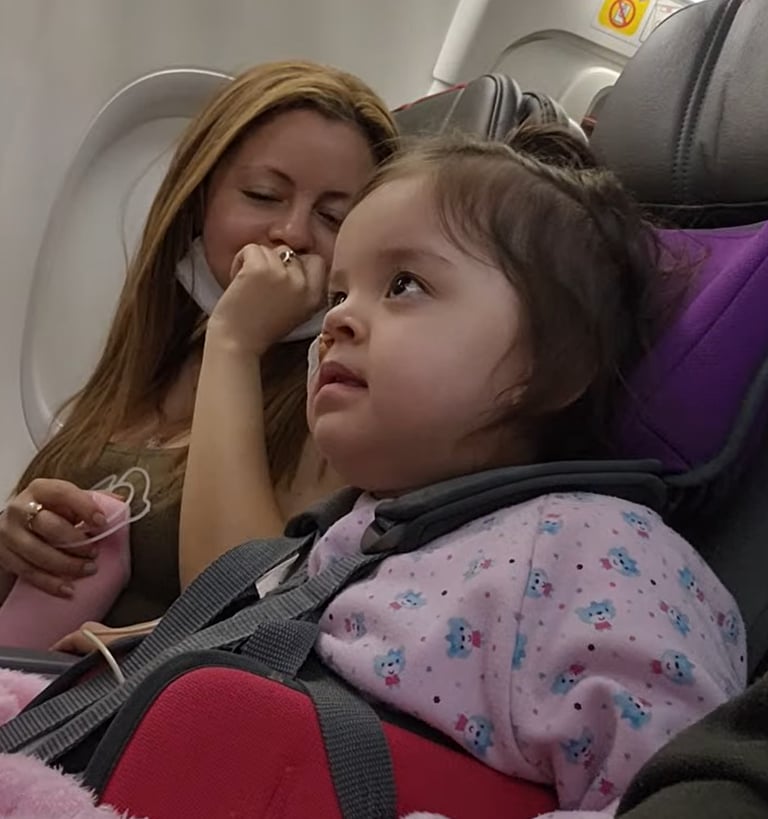
Now, as we prepare to bring our daughter to Mexico, we feel that same spark of hope that first began with a book in the middle of the night. What once felt distant and impossible is suddenly becoming real. We are gathering documents, arranging care plans, organizing her equipment, and slowly piecing together everything we will need for the weeks we’ll spend far from home.
But preparing for this trip also comes with a heavy financial weight.
The treatment fees alone are USD 35,000, and on top of that we must cover accommodation, air tickets, food, insurance, and all the additional costs that come with traveling overseas with a medically complex child. These are expenses we simply cannot manage on our own, especially while taking time away from work to be fully present for Antonella during her treatment.
Every step forward fills us with hope, yet also reminds us of the practical challenges we must overcome to give her this chance. Still, the hope is stronger. The possibility of opening a new door for her keeps us moving, one preparation at a time.